Sunday, August 1, 2010

Race to the end 7/11/10

After much study and a walk through test, I'm now giving tours of the new traveling exhibit at AMNH about the race to conquer the South Pole in 1911. You can find out more about the hall here.

Below is a picture of the museums' recreation of Framheim, which was the Norwegian base camp on the Ross Ice Shelf at Antarctica. I wasn't supposed to take pictures in the hall; it's not allowed.


This is a picture of me getting psyched up for my first tour. I try to put a lot of energy into the presentation. The tour is very paced as I try to get across as much information as I can. I really don't pitch the tour to anybody in particular. I go through the material as though I'm explaining it to a peer. 


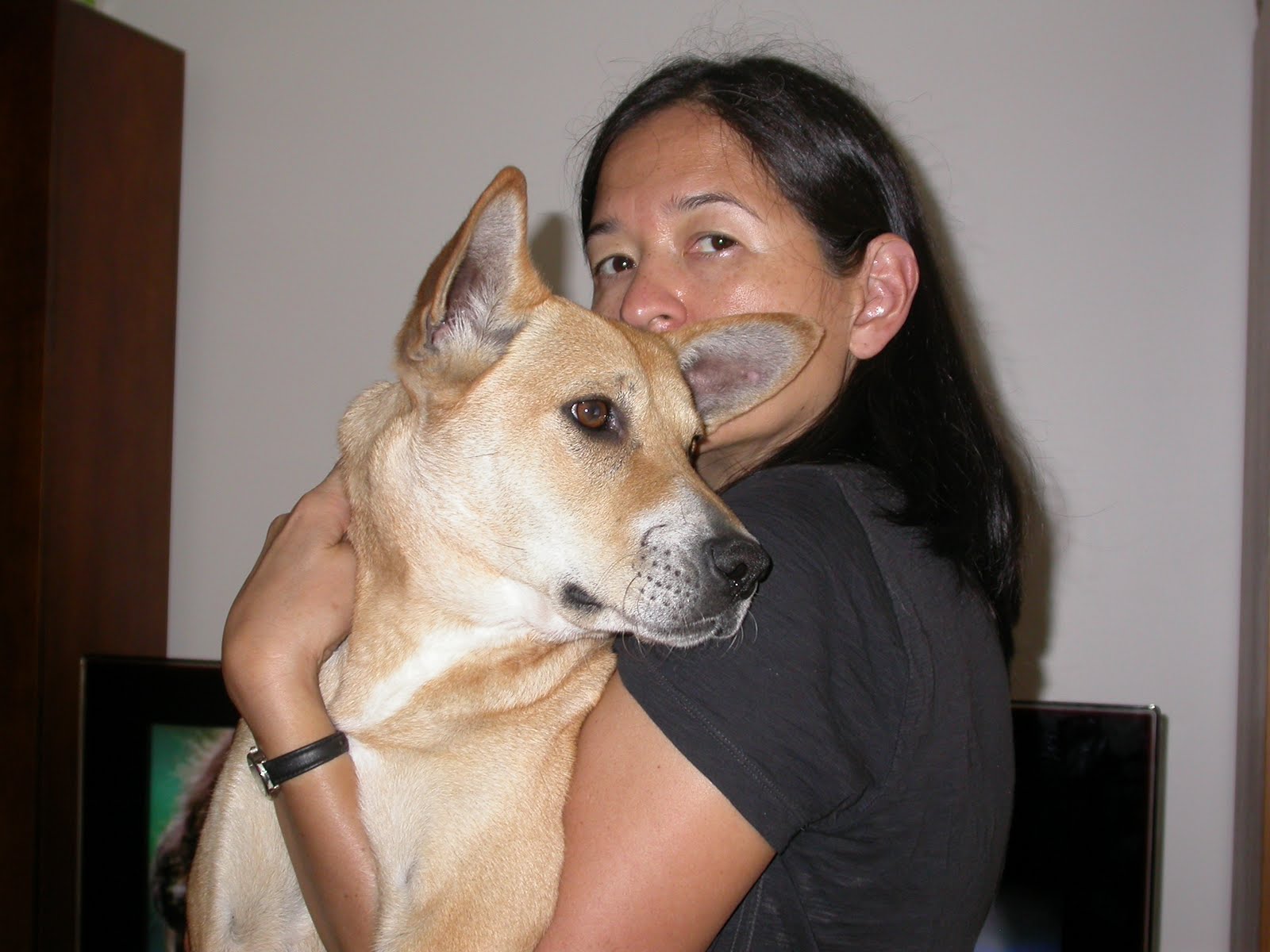
Ulla (aka Patty) came along to see the tour. That was nice. Here is a picture of Ulla posing in front of a diorama in the hall of Asian Mammals. It's a scene of a pack of wild dogs attacking a deer. It's the same diorama in the picture with me above.

I think that's appropriate since we like dogs. The dog packs usually consist of about a dozen dogs, but sometimes they can have as many as 60 dogs.

Ulla thinks she looks like a tourist in this picture.

I think she looks good.


Below is a pic of me after the tour. I need to wind down a little bit after each one. We went to EJs on Amsterdam for lunch. Ulla had eggs and potatoes and I had an order of whole wheat flapjacks. I think that was a good choice.

Ulla took these pictures. If I had my camera I would have provided pictures of what we ate.


I had a great tour and I'm glad Ulla was there. 

I'll probably do the tours most Sundays until the exhibit ends in January.

Wednesday, July 7, 2010

Independence Day 2010

My friend Alex invited people up to his apartment to see the fireworks on the 4th of July. He lives in a really nice hi rise on fifth avenue and his apartment is on the 63rd floor. There are 2 apartments on each floor and Alex's faces west. It's a great place for sunsets and fireworks over the Hudson.  

The building with the needle antennae in the picture below is the Conde Nast building. I hear that they are moving out.


These are views of the sunset from Alex's kitchen. I guess it was about 8:15 pm when I took these. The heatwave was coming on.


This is Linda, Alex's wife. She is cutting up vegetables. There was sushi, vegetables with dip, knishes of some sort, and later sandwiches from Sarge's deli on 3rd avenue. I didn't get more pictures of the food because I was shmoozing, otherwise I would have photographed what we were eating.


I think some of these pictures are pretty.


Here is Jim and Alex. Jim is an anesthesiologist and has been assisting in very many cosmetic procedures. There has been a spike in liposuction's it seems, which is characteristic of the onset of summer.


These remaining shots are of the fireworks. Photographing fireworks, for me, is like catching lightening in a bottle. I never know what I'm going to get with my hurting camera and limited skill.


I took about 70 pictures and thought these were the most interesting.  The building with the red light on the left is 1 Penn Plaza and Madison Square Garden is across the street.


Thanks Alex for a great time and the opportunity to take these photographs.

I hope I get invited again!

Monday, June 21, 2010

Race To The End Of The Earth: Walking The Hall 6/20/10

On 5/29/10, the AMNH opened a new exhibit entitled 'Race to the End of the Earth', which is about the competition between 2 teams of explorers striving to be the first to reach the South Pole in 1911.

One team was British and the other Norwegian. You can find out more about the story at the AMNH web site. I'm studying the facts in order to do a tour of the hall. I should complete my test soon and I figure I'll give about 2 tours a month in this hall.

I was there yesterday to study and walk the hall. I  took a few pics.


These are some artifacts from the Norwegian team. A violin; if you're in Antarctica in 1911 there's no wireless. For entertainment you might feel fortunate if your teammates could play an instrument or sing. The watch belonged to Roald Amundsen the leader of the expedition. The cup, enameled with the name of the ship the Norwegians sailed to Antartica, is genuine as well. The ship was named the 'Fram', which means forward in Norwegian.The 'Fram' can be seen and boarded at the Frammuseet in Norway.


This is a reproduction of one of the tenements that the British team members slept in while wintering in Antarctica prior to the dash to the south pole.


Above is a simple shot of visitors in the hall. I wasn't allowed to take pictures, I later found out from a guard.


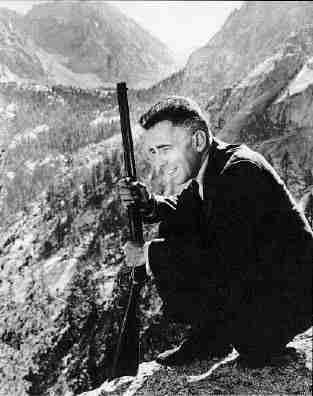
These are more artifacts. Roald Amundsen s rifle which would have been used to shoot seals, or dogs. Amundsen s skiis are here and one of the sledges. I don't think the sledge actually went on the trip to the pole but is an example of the type actually used. It does come from the AMNH collection.


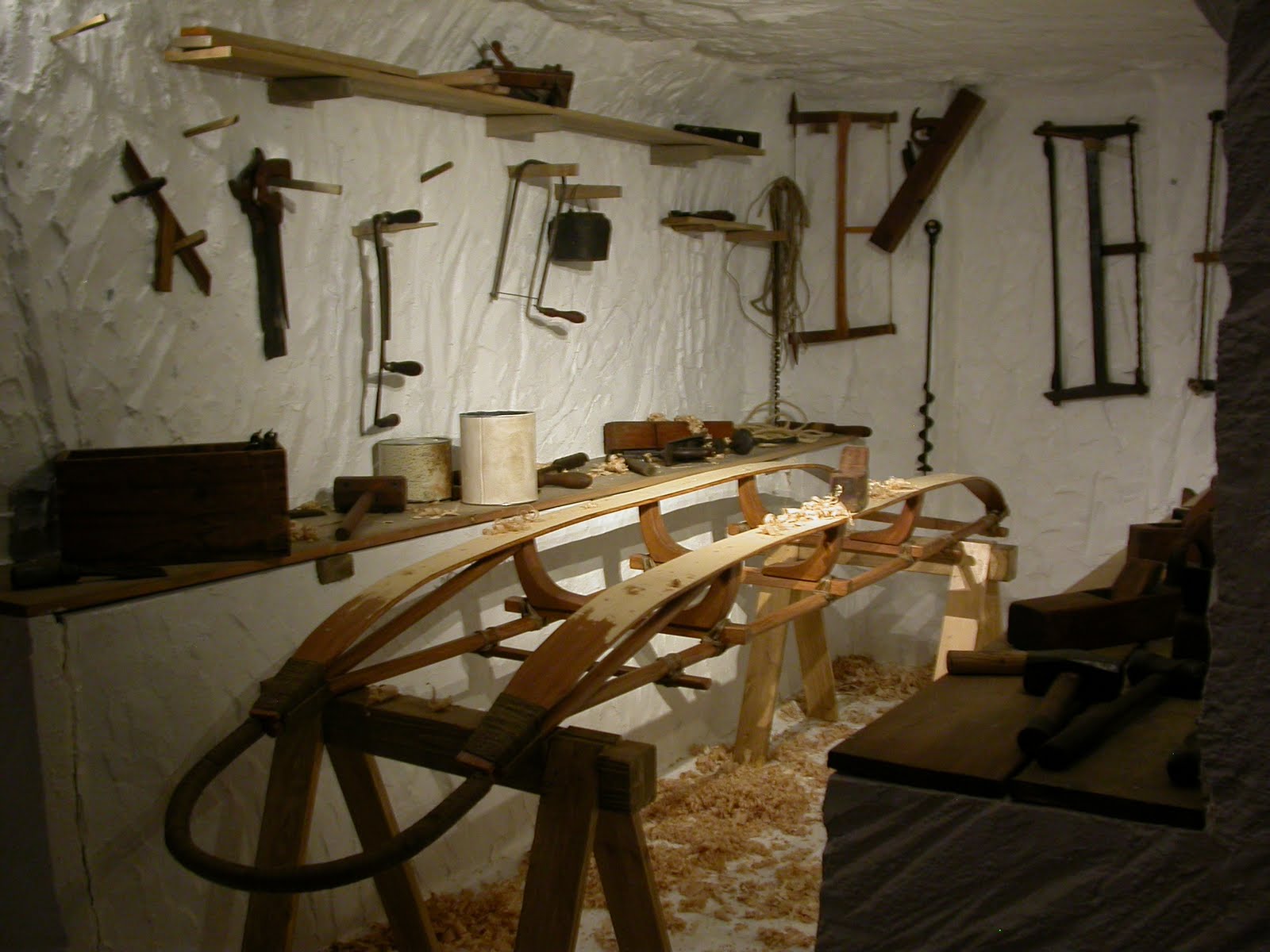
Whereas Robert Scott's British team set up huts at their base camp, the Norwegians excavated a series of tunnels to live and work in. Armundsen reasoned that the less time the men had to spend outdoors, the better for their overall health and well being. They even built a sauna!


I took a few shots of the little models that are included in the exhibit. A key part of the story which directly affects the performance of the competing teams is the mode of transportation that each used. The British used ponies, motorized tractors, and finally man hauling to transport their supplies on the trip to the South Pole.

The Norwegians believed in dogs, dogs, dogs. Modeled above is a sledge team which had 13 dogs including the lead dog.


Above is a reproduction of the tent that the Norwegians left at the South Pole in 1911. They called it 'Polheim', which means 'home at the pole'. I had to use a flash because the light was a little low for my camera. The case in the foreground contains the actual binoculars that Amundsen wore that day at the pole.


I should have my test for the tour in about 2 weeks. Wish me luck.

Thursday, June 17, 2010

Mark Hellinger: American Tabloid

Many times I've come across Mark Hellinger since becoming a film fan. My sense was that he was a New York character in the vein of Weegee or Walter Winchell, but I really didn't know much about him. I knew the movies he produced. I even knew the sound of his voice from the staccato narration of the 1947 film The Naked City. 

I had to find out more, and as often happens, I did. 


Mark Hellinger was born into an Orthodox Jewish family in 1903, but later became a non practicing Jew. Always drawn to journalism he started on the city desk at the New York Daily News in 1923. By 1925, he had his own column and specialized in news and Broadway gossip. He hobnobbed with figures like Flo Ziefeld, Walter Winchell, and crime figures like Dutch Schultz and Legs Diamond.

By 1937, he was a syndicated columnist in 174 newspapers nationwide. Also that year he was hired by Jack Warner as a writer/producer and provided the story for the 1939 James Cagney/Raoul Walsh gangster film The Roaring Twenties based in his own experiences.

In his onscreen foreword to the film, he wrote,

"It may come to pass that, at some distant date, we will be confronted with another period similar to the one depicted in this photo play. If that happens, I pray that the events, as dramatized here, will be remembered. In this film, the characters are composites of people I knew, and the situations are those that actually occurred. Bitter or sweet, most memories become precious as the years move on. This film is a memory - and I am grateful for it."

Hellinger produced several pictures for Warner Bros, each  bearing his indelible stamp of romantic realism. These include They Drive By Night (1940), High Sierra (1941), and Manpower (1941).


With the start of WWII, movies became irrelevant to Hellinger and he was aching to get into the fight. He was repeatedly rejected from military service due to a heart condition. One doctor told Hellinger that he was not in good enough shape to receive the medical vaccinations needed to travel overseas.

In 1945, he set up shop as an independent producer at Universal. He bought Hemingway's short story 'The Killers' only because he couldn't afford to buy one of the author's books. He cast a former circus acrobat in the leading role after his wife, Gladys looked at a screen test and thought 'Isn't he handsome!'. After Hellinger watched the first dailies with Burt Lancaster, he hollered 'So help me, may all my actors be acrobats!'.


The Killers (1947) was a confirmed hit. It assured Hellinger's reputation as a great filmmaker and made every actor in it, including Lancaster and a young Ava Gardner, a star.

The prison film, Brute Force (1947) was the follow up and featured Burt Lancaster as an inmate and Hume Cronyn as the sadistic captain of the guard. Directed by Jules Dassin, it's described as a 'jolt of post war nihilism with a punch to the gut'.


His next Film 'The Naked City' captured all that Hellinger loved about New York City. Shot on location by Jules Dassin, the film was written by Marvin Wald, who 'prowled autopsy suites and police interrogation rooms to attain the realism that Hellinger wanted'.


The film was a smash and later inspired a long running tv series. More of a police procedural than a film noir it did win Oscars for cinematography and editing.

I'd say the film does have a certain left of center point of view. The New York depicted is a city of working people who have jobs in offices or factories, and commute on crowded subways. The heroes are non glamorous police detectives who labor at boring surveillance and live in Queens. It's much different than the view of NYC peddled by movies today.

Key people involved with the film were later black listed as the result of the HUAC hearings into Hollywood. These include screen writer Malvin Wald and director Jules Dassin.


While observing the classic chase sequence over the Willamsburg Bridge, Hellinger suffered a heart attack and was confined to an oxygen tent in his hotel suite. His bad heart and endless intake of brandy and cigarettes had done it's work. He died on December 21, 1947.


'Mark Hellinger was populist storyteller in print and later on film who pursued the essence of dramatic realism. his innate sense of public taste and sensibilities during the immediate post war era remain unparalleled'.

In January 1949, the 51st Street Theater in Manhattan was renamed the Mark Hellinger Theater in his honor. The original production of 'My Fair Lady' ran there from 1956 - 1962. In 1989 the venue was converted into the Times Square Church.


Thanks to Alan Rode for his wonderful biography on Hellinger.
Monday, May 31, 2010

Sweet Pea Saved!


You may recall that last week Ulla and I were trying to coax a small stray dog into coming home with us. Actually we were trying to coax her into going home with Ulla. We didn't have much success although we came close.

Ulla went looking and encountered Sweet Pea everyday after that.

Sweet Pea would always follow Ulla home but never come inside. Ulla couldn't put a leash on her, but the dog consistently followed Ulla to the apartment house. She would not come into the building. Sweet pea would pause, turn around, and trot back, through the streets of Jersey City, to the dump under the highway where she chose to live.

Thursday it stormed. Ulla did not see Sweet Pea when she went to the dump under the highway.

Ulla continued to leave food for Sweet Pea.

I went out to JC on Friday and went with Ulla to the dump under the highway looking for any sign of the dog.

We found the empty containers that Ulla had filled with food and left out for Sweet Pea. Even though Ulla had not seen her for one day and a half, we had definite signs that the pup was still in the area.

I went home. I wasn't sure we'd ever see the dog again. I didn't say anything to Ulla about my doubts. I really didn't know anymore than she did.

Then, later that night, Ulla called me.

She said 'Guess what!'.

I said 'You got her!'.

I guessed right.

Ulla went back Friday and encountered Sweet Pea at the dump under the highway in Jersey City.

As usual Sweet Pea walked Ulla all the way to her apartment house. This time Sweet Pea came into the building and followed Ulla into the apartment.

A new chapter in Sweet Pea's life is starting.

Think of that.

Here are some pictures of Ulla and the little dog we've been calling 'Sweet Pea'. This is Ulla and Sweet Pea canoodling.


Sweet Pea is an affection sponge. She loves to be petted and is always jonesing for a belly rub.

She seems to be sort of house trained. There have been no 'accidents' reported, as far as I know.


I gave her a belly rub yesterday.


We really know nothing about her... Where she's from.... What happened to her..., etc. She can't tell us.

I guess Sweet Pea is a Jersey dog, but that's ok.

Nobody is perfect.

She's now seeing parts of the city she's never seen before. Sweet Pea is easy to walk and is very well behaved.

She hasn't barked once when I've been around. She doesn't mind me.

It looks like Sweet Pea will be a winner after all. It might not have turned out that way.

But we don't have to think about that anymore.

Best wishes to you, Sweet Pea.

Wednesday, May 26, 2010

Dog Hunt

My friend Ulla, who I call 'Patty', encountered a stray dog while walking her own dog. I went out there on Sunday for a visit and we decided to see if this little dog would show up. She did. That day she was called 'Harriet' by Ulla, but since then her name was changed to 'Sweet Pea'.

She's probably very young, less than 1 year I would guess. Sweet Pea is very friendly and indescribably smart.


Here's Sweet Pea.


Ulla's dog is named 'Jack'. Here's a picture of Ulla and Jack out for a walk that day in Jersey City, NJ.


Ulla has been leaving food and water for Sweet Pea in an effort to help her out. Thank God the weather is warm. Sweet Pea will even eat from Ulla's hand. That dog knows what's what.


She's a wonderful dog and loves to play with Jack. Here they are having nothing but fun.


This is a picture of Sweet Pea adopting a 'play posture'. When a dog sticks it butt up like that it's an indication that she wants to play.


Ulla and I tried to think of a way to get a leash on Sweet Pea. I had the idea that if we sat down and acted nonchalant, Sweet Pea would settle down. If we then offered food, maybe we could get a leash on her.

The secret of life is acting nonchalant.


This idea partially worked. Sweet Pea hung out with us and everything was very sedate.


As I said, she's very smart and when I tried to put a collar on her she darted away out of reach.

These pictures were taken by Ulla.


This would be a picture that I took of Sweet Pea. Ulla is in the background taking a picture from another angle.


Sweet Pea is very attached to us up to a point. She followed us all the way back to Ulla's apartment, but we could not coax her to come inside. She did edge into the building, but ran out before I could close the door.


Ultimately, this isn't about me.


Maybe if Ulla doesn't feed Sweet Pea so much, she might get hungry enough to come into the building and let Ulla provide her with a home.


Hi, Sweet Pea


I'll update this post as news develops.

'There are 8 million stories in the Naked City and this has been one of them' - Mark Hellinger

Sunday, May 16, 2010

Fritz Lang: Metropolis and elsewhere

We ventured down to the Film Forum on West Houston to see the restored version of the 1926 German silent science fiction epic 'Metropolis'. The film was notoriously cut soon after its release. The plot of the film didn't make much sense to begin with and removing 30 minutes didn't help. Fans of the film always marveled at the films scale, the beauty of it's design, and camera innovations.
Fritz Lang would have told you that he was the greatest film maker in Europe in the 20s. 'Metropolis' was the most expensive movie ever made at the time.

Due to to rise of the Nazis, Lang was compelled to leave Germany. There is a bizarre tale around his departure that involves propaganda minister Joseph Goebbels. You can read the wiki site for detail, but the story can't be verified.

Lang emigrates to France in 1932. He is later contracted by MGM and moves to Hollywood where he settles permanently in 1936. He makes 21 films over the next 21 years!

In America, he establishes himself as a highly proficient genre director and a progenitor of Film Noir. In Europe, he directed epic projects, but in America his budgets were more modest but he always maintained his core vision and his entire oeuvre is infused with paranoia, mystery and obsession.

Alfred Hitchcock dubbed himself the 'Master of Suspense'. The BFI named Lang the 'Master of Darkness'. Most cool.

To quote the wiki on Metropolis:

'Metropolis is set in a futuristic urban dystopia and makes use of this context to explore a political theme of the day: the social crisis between workers and owners in capitalism. The film was produced in the Babelsberg Studios by Universum Film A.G. (UFA). The most expensive silent film ever made, it cost approximately 5 million Reichsmark.'

Featured in the film is a Robot referred to as the Maschinenmensch. Pictured here with her inventor, the evil scientist Rotwang, it is disguised to look like a real woman and is sent among the enslaved workers of Metropolis to incite riots and violence.


The robot is sleekly designed and futuristic nearly 85 years later. All science fiction fans recognize this iconic image.

'M' is Fritz Lang's first sound movie. Made in Germany in 1931 it starred Peter Lorre in his first film role as the 'Kinder Mörderer', the Child Murderer, a serial killer who preys on children. By extension I guess that meant he was a pedophile.

The film is filled with expressionistic imagery and nail biting suspense. Not only is Peter pursued by the police but by criminal elements as well. The underworld feels the heat from the police crackdown on all criminal activity due to Lorre, and decide to find him themselves.

This idea of the underground criminal society shows up in later Lang films and is echoed the spy films of the 60's. James Bond's super criminal nemesis 'Specter' is inspired by this.

Once in Hollywood, Lang worked chiefly in genre films notably Film Noir. While The City Sleeps, 1956, is one example of Lang's output. The visual style is a little flatter due to budget but the film is still preoccupied with crime, and in this case, the effect of a serial killer on a city and the staff of a newspaper trying to guess his identity.


The cast includes Dana Andrews, Thomas Mitchell, George Sanders, Vincent Price, and Ida Lupino! Time Out called this Lang's most underrated film.


Many Hollywood stars had the opportunity to work with Lang. Not all of them liked the experience. Henry Fonda recalled hating Lang for making Gene Tierney cry on the set of 'Return of Frank James'.

Other stars worked with Lang on more than one occasion. Edward G. Robinson, Glenn Ford, Gloria Graham, Dan Duryea, and Dana Andrews are but a few.

This is a picture of Lang with Joan Bennett.

Bennett and husband Walter Wanger formed a production company with Lang and she appeared in 4 of his films. Remember Joan from the tv show 'Dark Shadows'?


Lang, the Hollywood studio professional, made Westerns, too! What does a German emigre know about the American West? When Lang came to America, he was fascinated by American Culture. Friends and colleagues remember how his speech was always peppered with the latest American slang.


Rancho Notorious is a 1952 western starring Marlene Dietrich, Arthur Kennedy, and Mel Ferrer. In it Marlene ran a criminal hideaway called Chuck-A-Luck and Arthur and Mel vie for her attention.

A Lang western could feature beautiful vistas. Contrasting Lang with a director like John Ford, a Lang film might also take place in little, shadowy, claustrophobic cabins and play up the hoof beats and gunfire more than celebrating pioneer virtues.

If you'd like to learn more about Fritz Lang, then check his wiki page. You might also try to find a copy of 'Fritz Lang in America' by Peter Bogdanovich which is the transcript of several interviews with Lang.

We had a great time on Sunday at the Film Forum.

Jim, right in the picture, went to the movie with me and I guess we look a little bleary after sitting through the 2.5 hour opus.

Bobby, center, did not attend the showing. He just looks like that normally.